Today marks the release of the final game in Bungie’s Marathon Trilogy on Steam by some lifelong friends of mine. I know this series is not very familiar to most people, so I want to talk about the Marathon games and my connections to them.
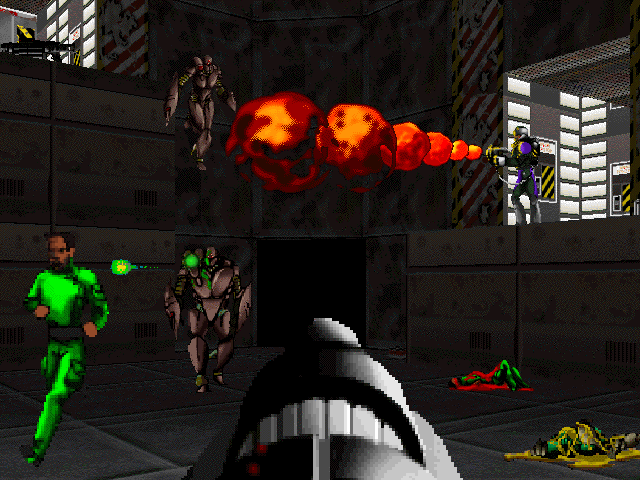
Marathon is a first-person shooter series released by Bungie for the Mac from 1994–1997. Graphically, Marathon offers a unique edge over Doom with its ‘2.5D’ engine, which allows characters to be viewed from eight different angles rather than just two, giving a visual look and feel I vastly prefer over early 3D. As an enhanced security officer awakened by an AI to defend against a surprise attack on your ship from a coalition of alien races, the story is a strong echo of its spiritual successor Halo.
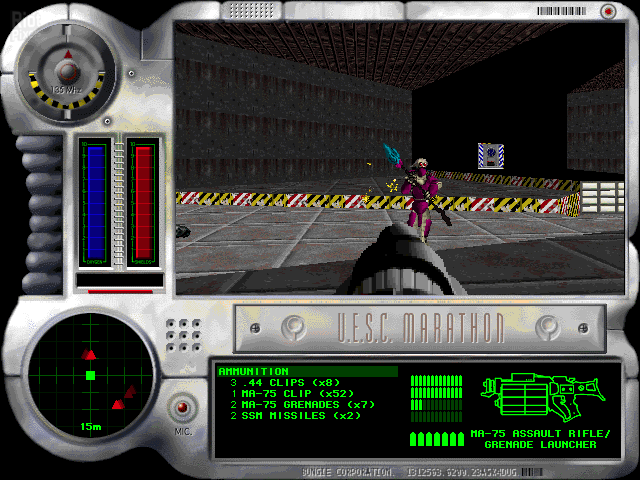
The first Marathon is the only one with a soundtrack, with future games going for more atmospheric audio landscapes. My favorite song is Leela, and I used to listen to the Craig Hardgrove piano cover on a loop, but Fatman is a close second.
After strong sales, Marathon 2 significantly upgraded the engine and pumped up the action. The final installment, Marathon Infinity, eschewed engine updates in favor of a strong suite of user content creation tools.
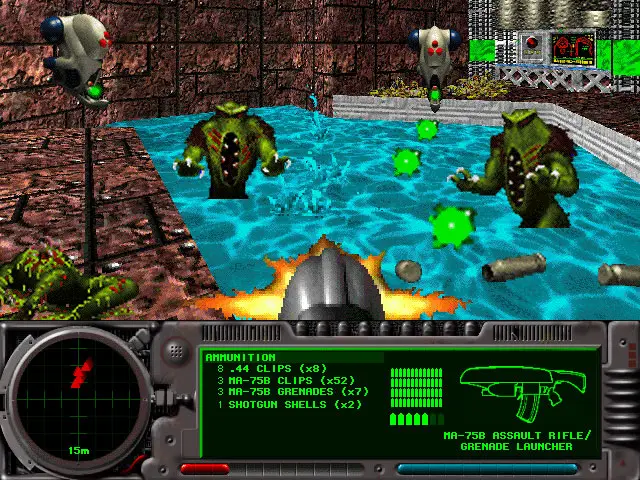
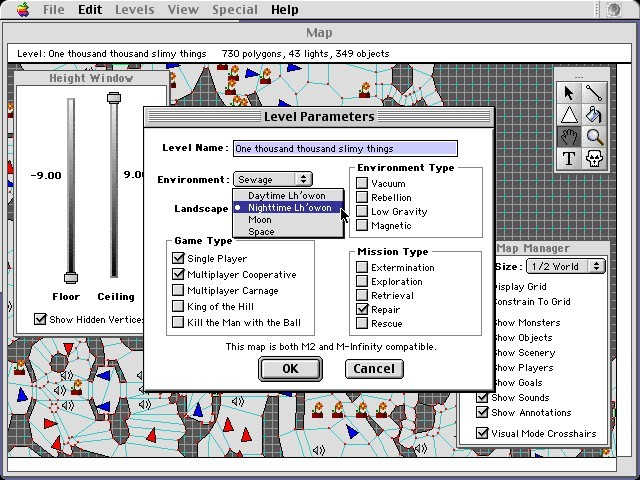
Its narrative depth truly set Marathon apart among early DOOM-like first-person shooters. While John Carmack famously quipped that ‘story in a game is like story in a porn movie,’ Marathon defied this with dense in-game terminals filled with communications between you and other characters.
You are a pawn in the machinations of unreliable narrators with limited knowledge in a chaotic time within a vast universe with deep history, and both the broad strokes and details of the story have been actively debated for 30 years since. None more so than Marathon Infinity, which draws deeply from The Garden of Forking Paths to deliver a story I am still learning the depths of today.
The next thing that happened is almost unbelievable. Just before they were acquired by Microsoft, they gifted the source code and all of the assets to the community who began an open-source restoration. Faced with the challenge of naming a follow-up engine to Infinity, the community chose ‘Aleph One,’ a term from set theory that refers to an infinite set of infinite sets.
In the years that followed the project updated the Aleph One engine for modern hardware, all platforms, improved network code, matchmaking, lua scripting, plugins, controller support, graphics card support, and blew the lids off pretty much any limitations on user-generated content.
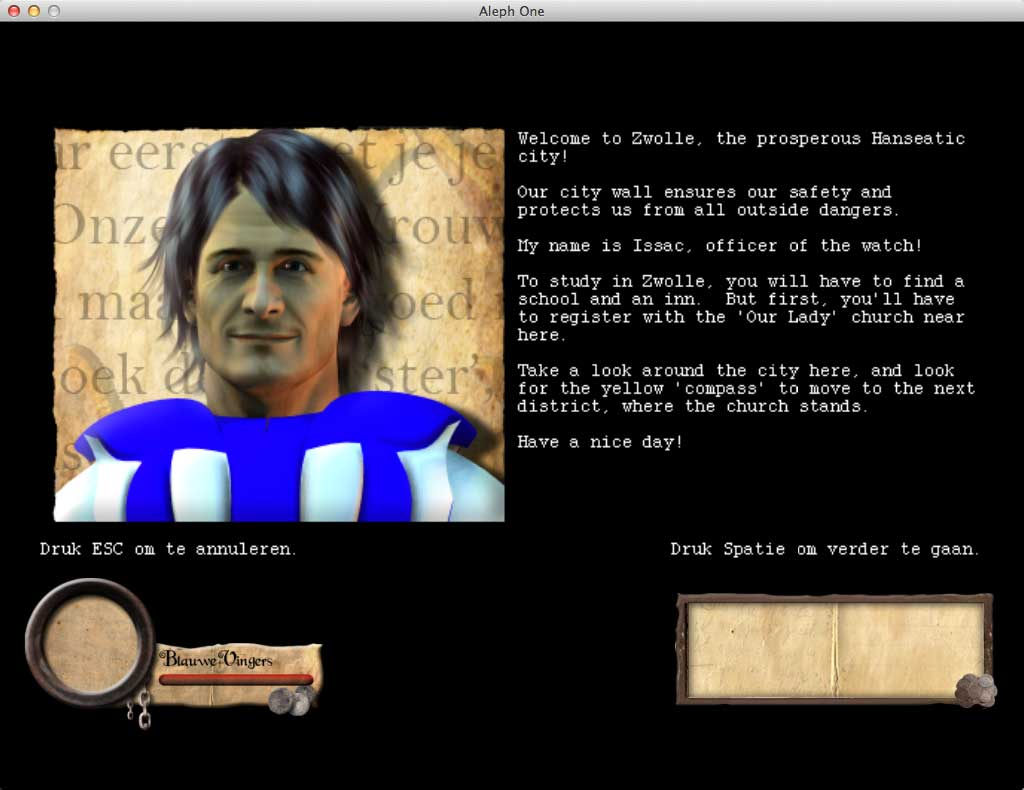
The community continued to create thousands of multiplayer maps, texture enhancements, new game modes, and even entirely new games. Some scenarios continued the original story, achieving nearly canonical status, while others used the Marathon engine to tell entirely different tales, like exploring the medieval history of Zwolle, Netherlands in 1524.
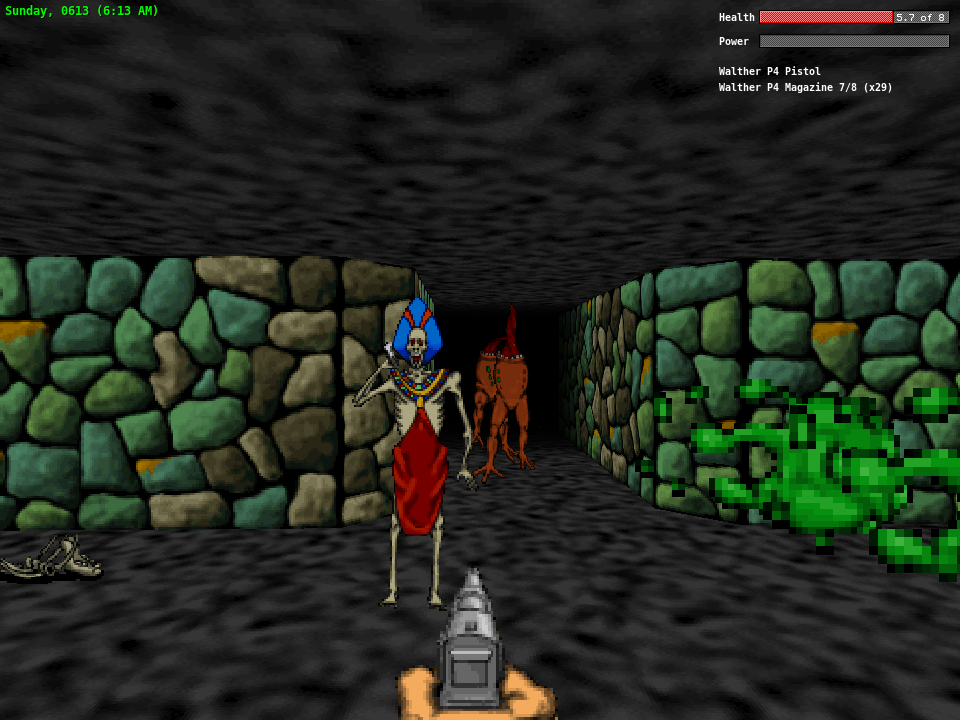
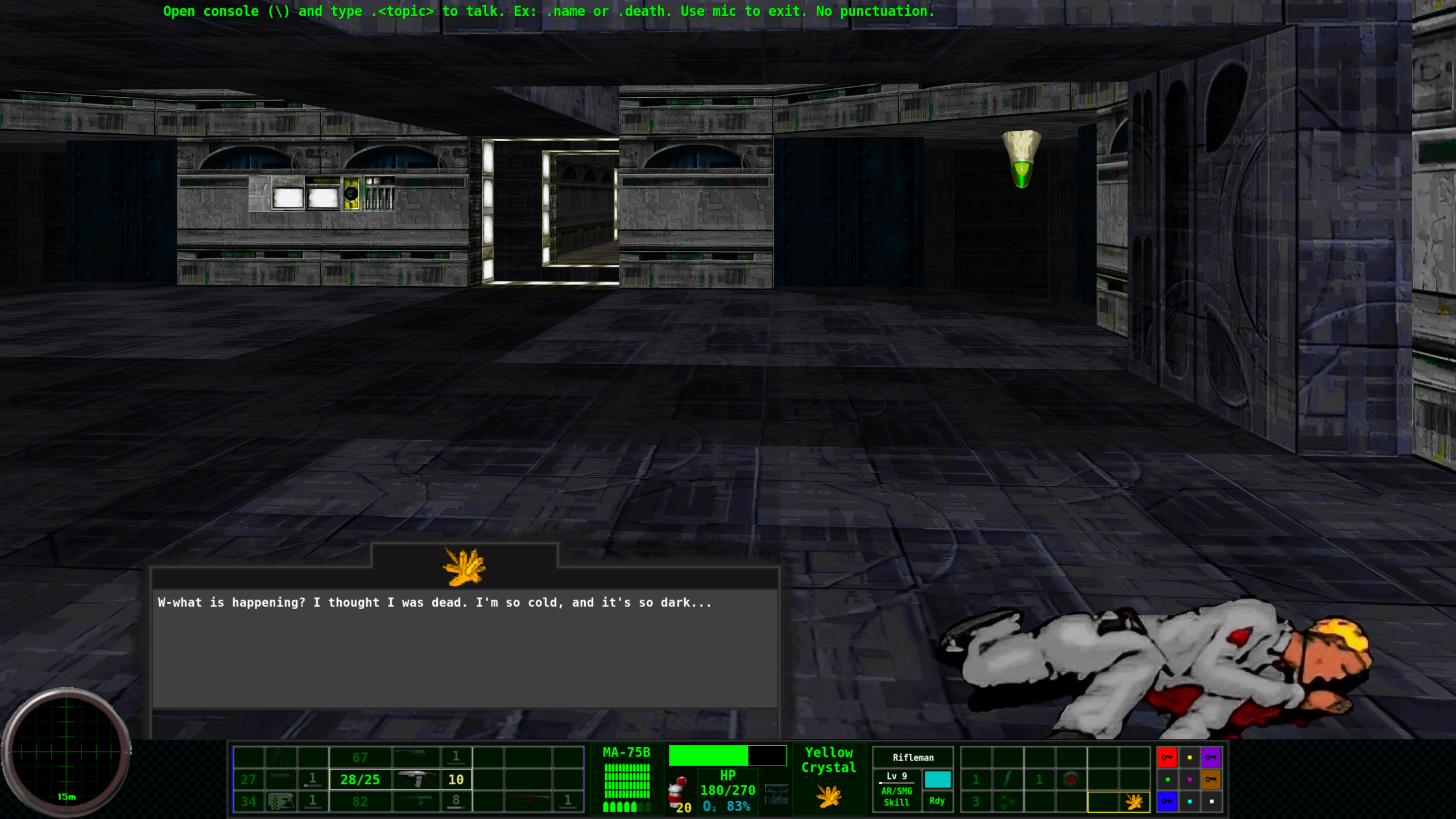
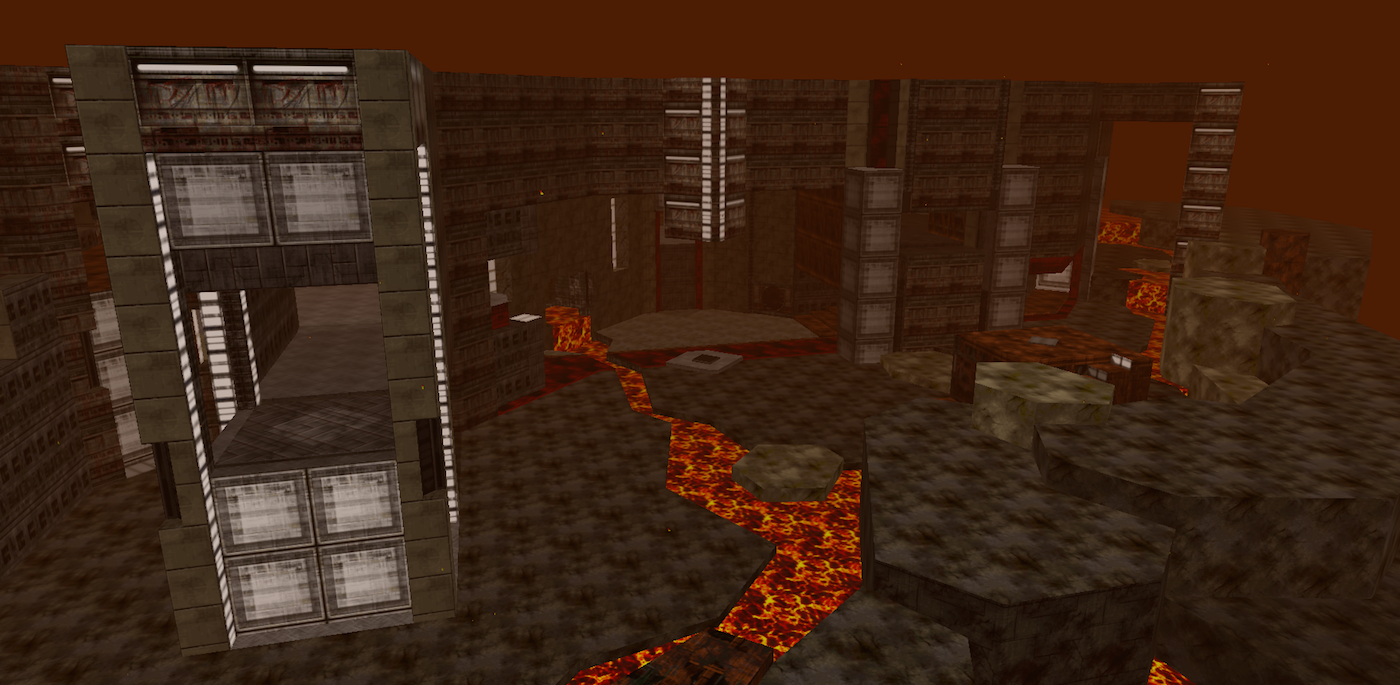
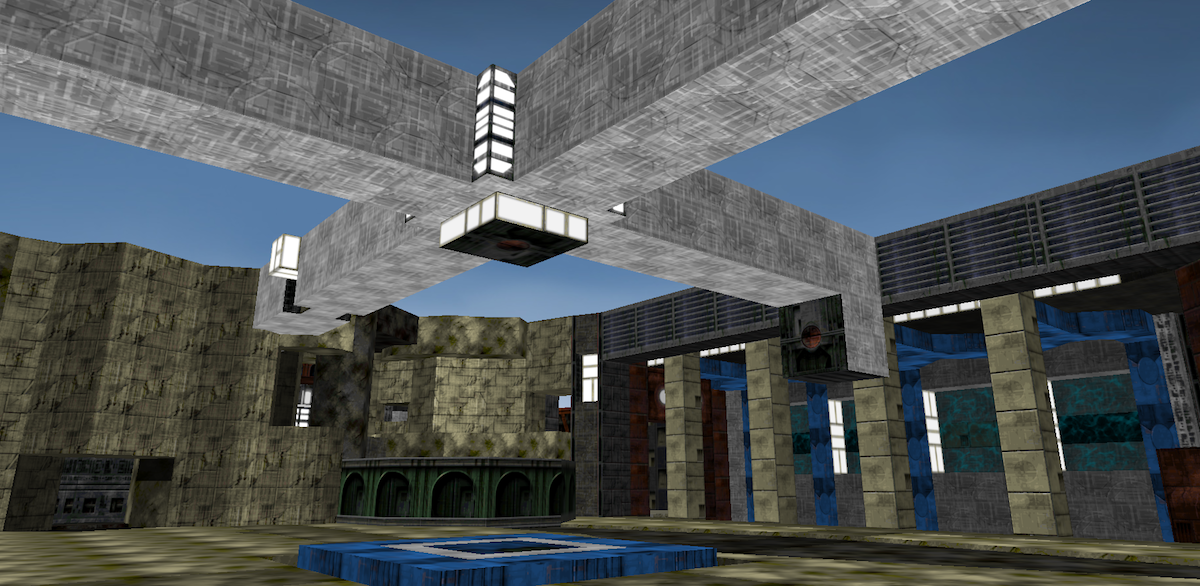
Multiplayer mapmaking alone continues to evolve year-after-year as designers continue to improve flow and aesthetics. These non-stop improvements have left every map from the original trilogy unplayable by comparison.
My journey with Marathon began early, watching the screensaver in Marathon 1 over and over as a child—a pre-recorded multiplayer match I memorized down to every turn. I played the trilogy as a kid in the 90s. As a pre-teen, I returned to the series, spending countless hours in the AOL chatroom, making friends and coordinating matches.
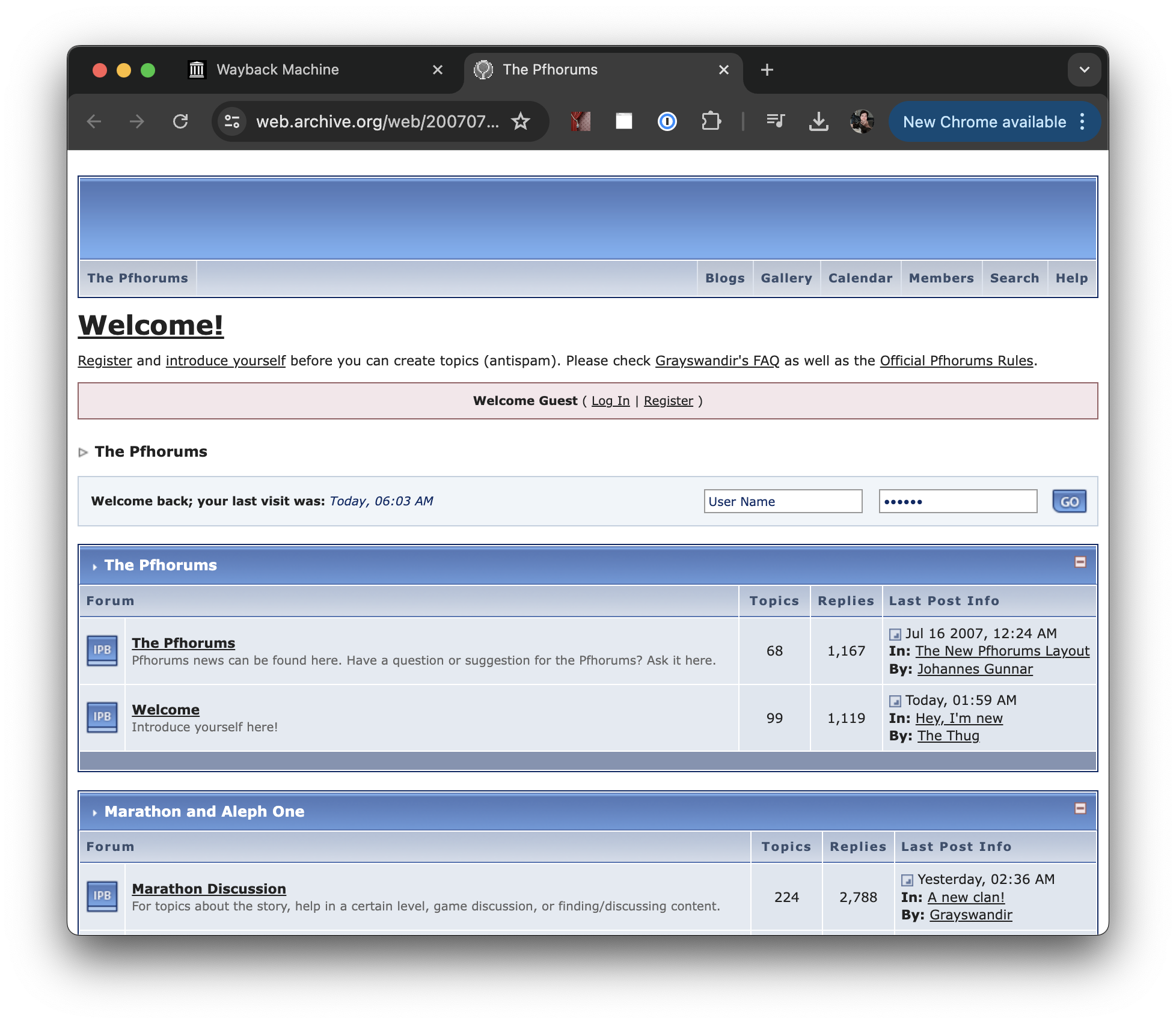
With an incredibly small amount of online forum experience I created my first ever successful website, the “Pfhorums,” to allow asynchronous collaboration across time zones between chat room members. It slowly grew, and after the fall of AOL chatrooms, became the heart of the younger majority of the community.
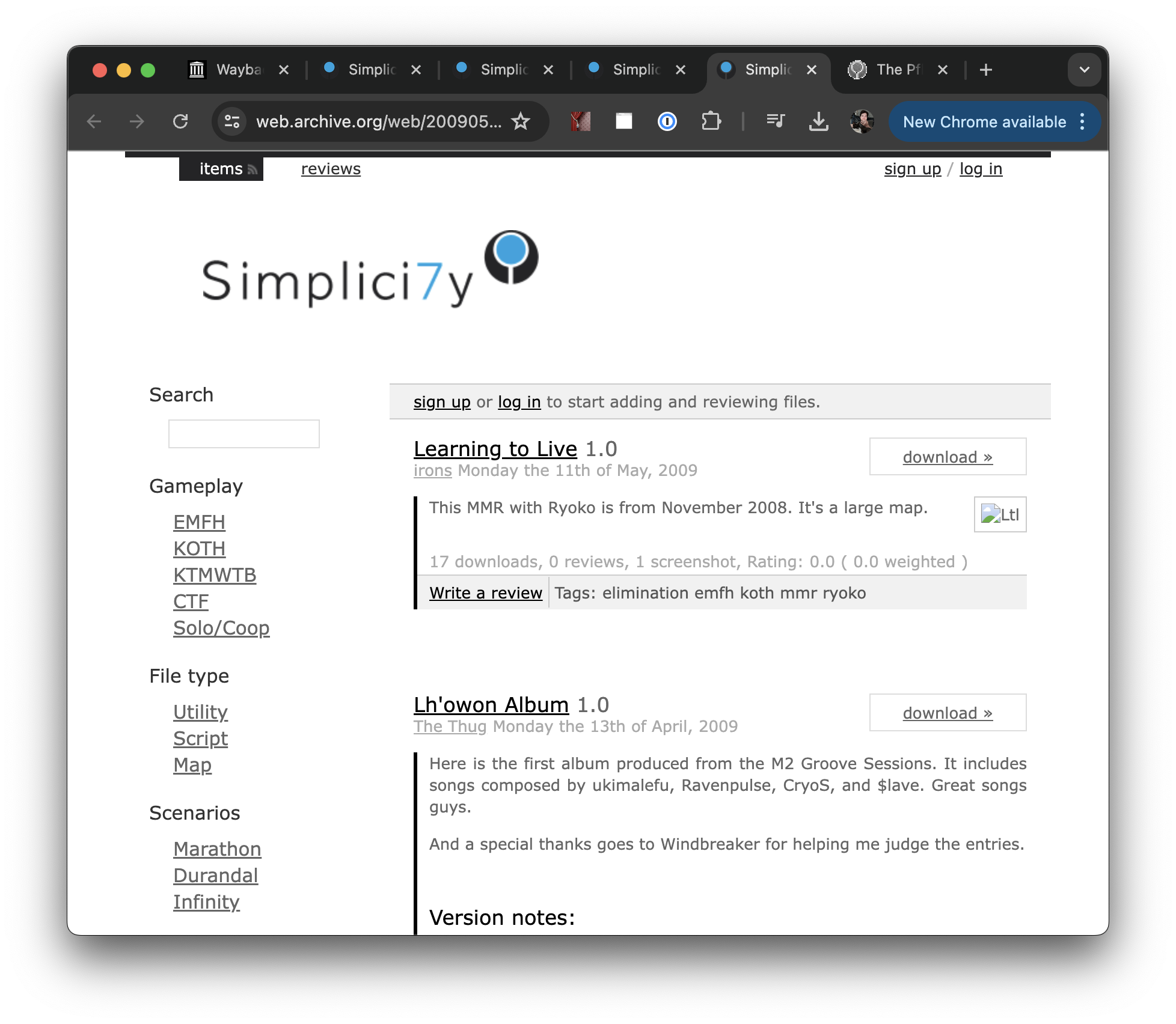
One day a leading mapmaker and friend in the community came to me with concerns that the community fileshare website’s continued technical problems foreshadowed its demise and asked that I begin work on a replacement.
I had never built a web application, but a new framework was making news with their outrageous “blog in 15 minutes” tutorial. I followed the tutorial to the letter, twice, and then on the third time changed the words to fit what I needed. “Post” became item, “comments” became reviews, and I limped ahead. After a few weeks of work, I knew enough to know everything I had written so far was worthless and started over.
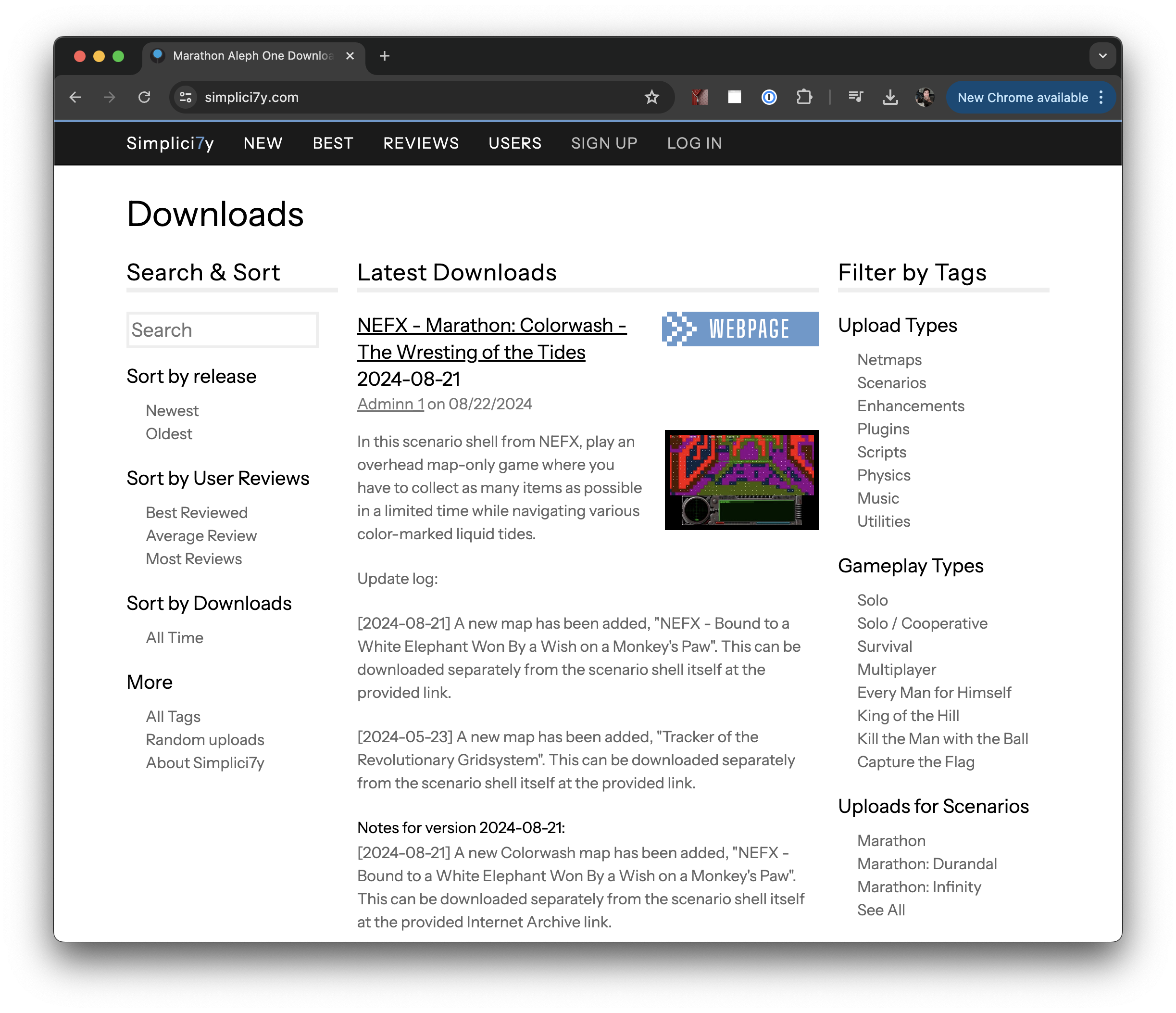
One day a fire consumed the Fileball server, and Simplici7y launched as the new home to user-generated content for the Aleph One community.
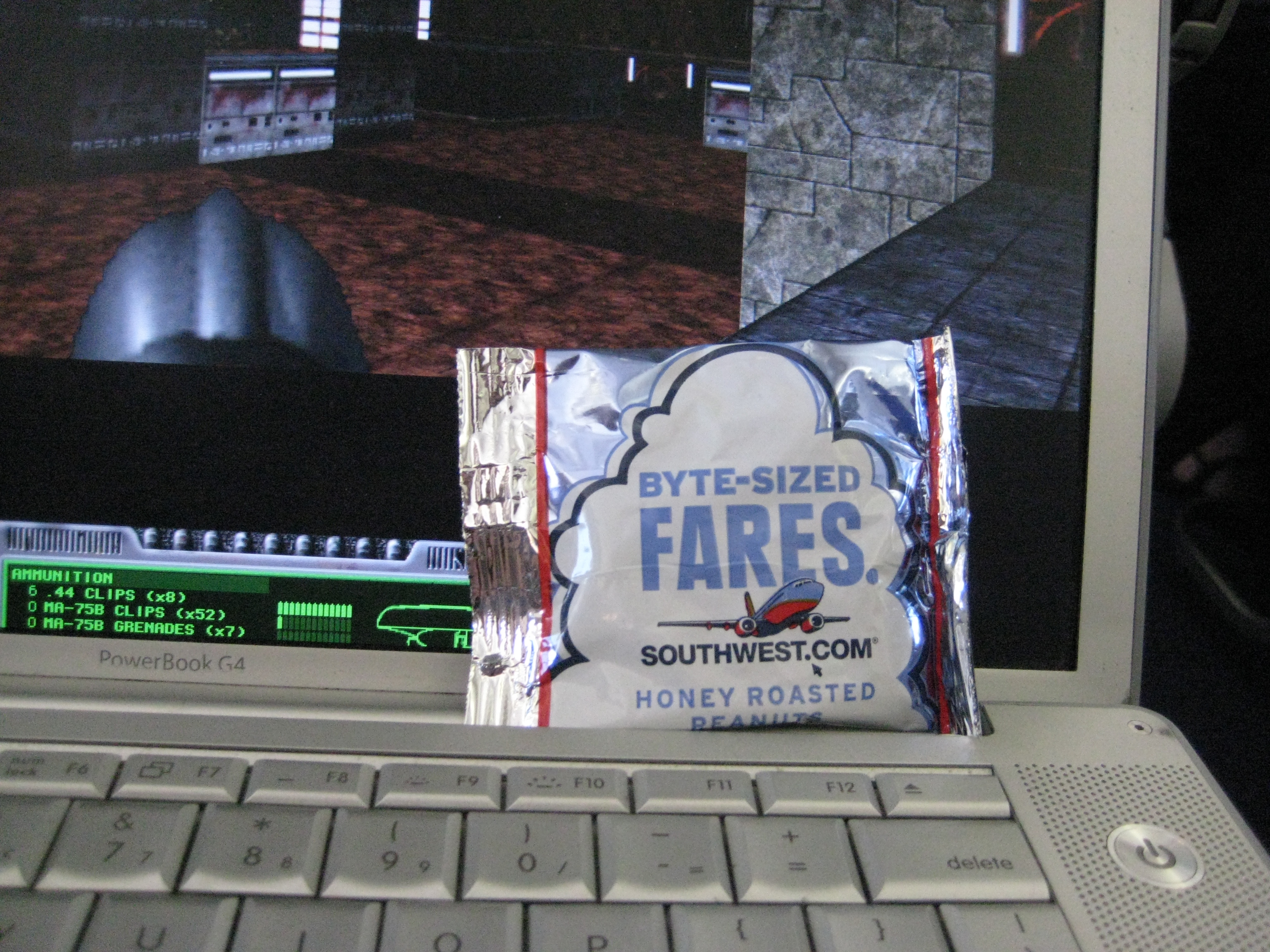
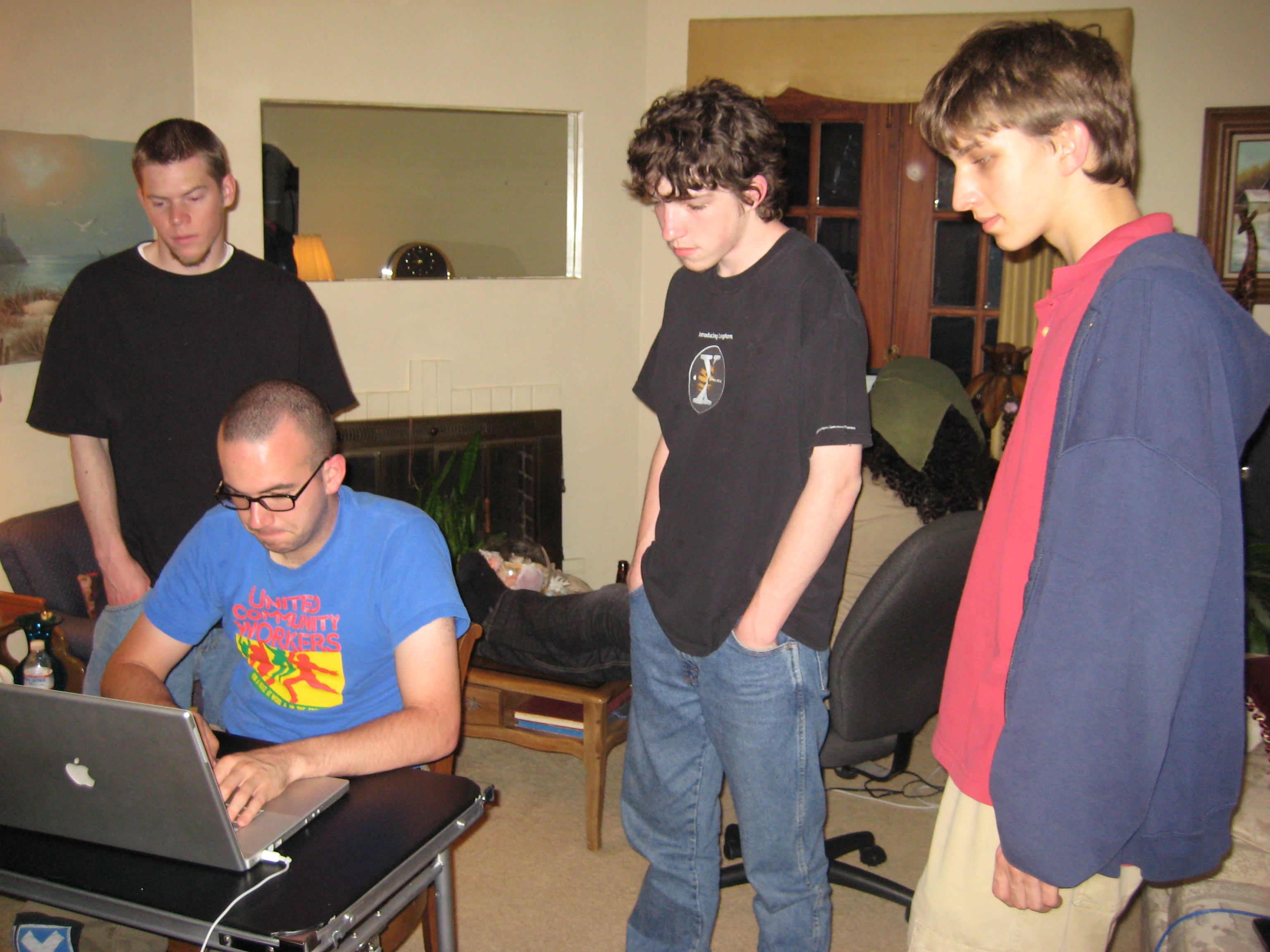
Now imagine you are a mother in the 2000s, sitting down for some Tex-Mex, and your son has just asked if he can fly 1,500 miles away to meet some friends from the internet. Anyone who has known a Bungie game deeply knows that 7/7/7 was a once-in-a-century occasion, and a gathering in Oakland, California was being planned on the Pfhorums.
I still can’t believe she said yes, but she could tell it was important to me. These people weren’t just my friends, it was through my work that they were together.
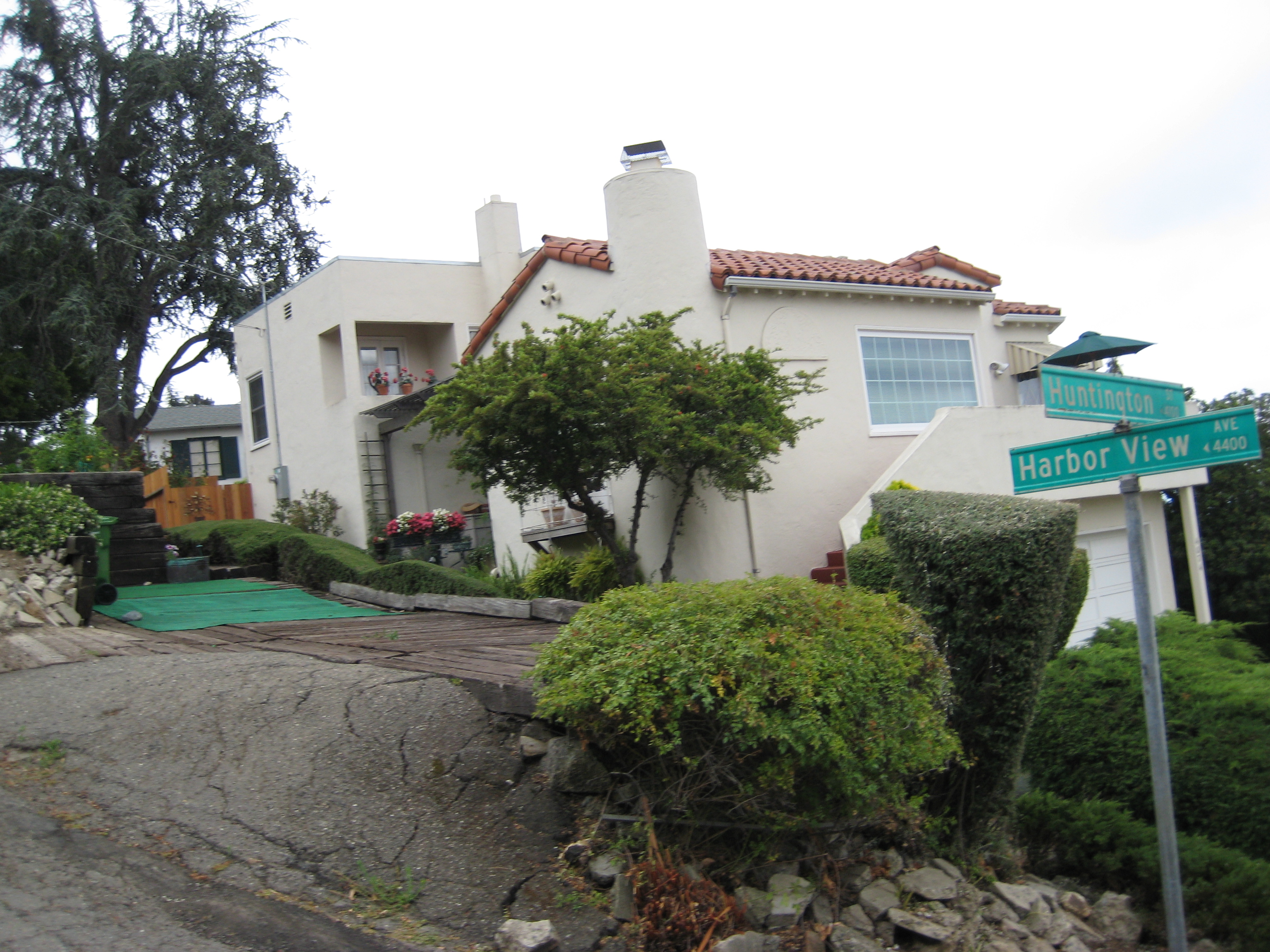
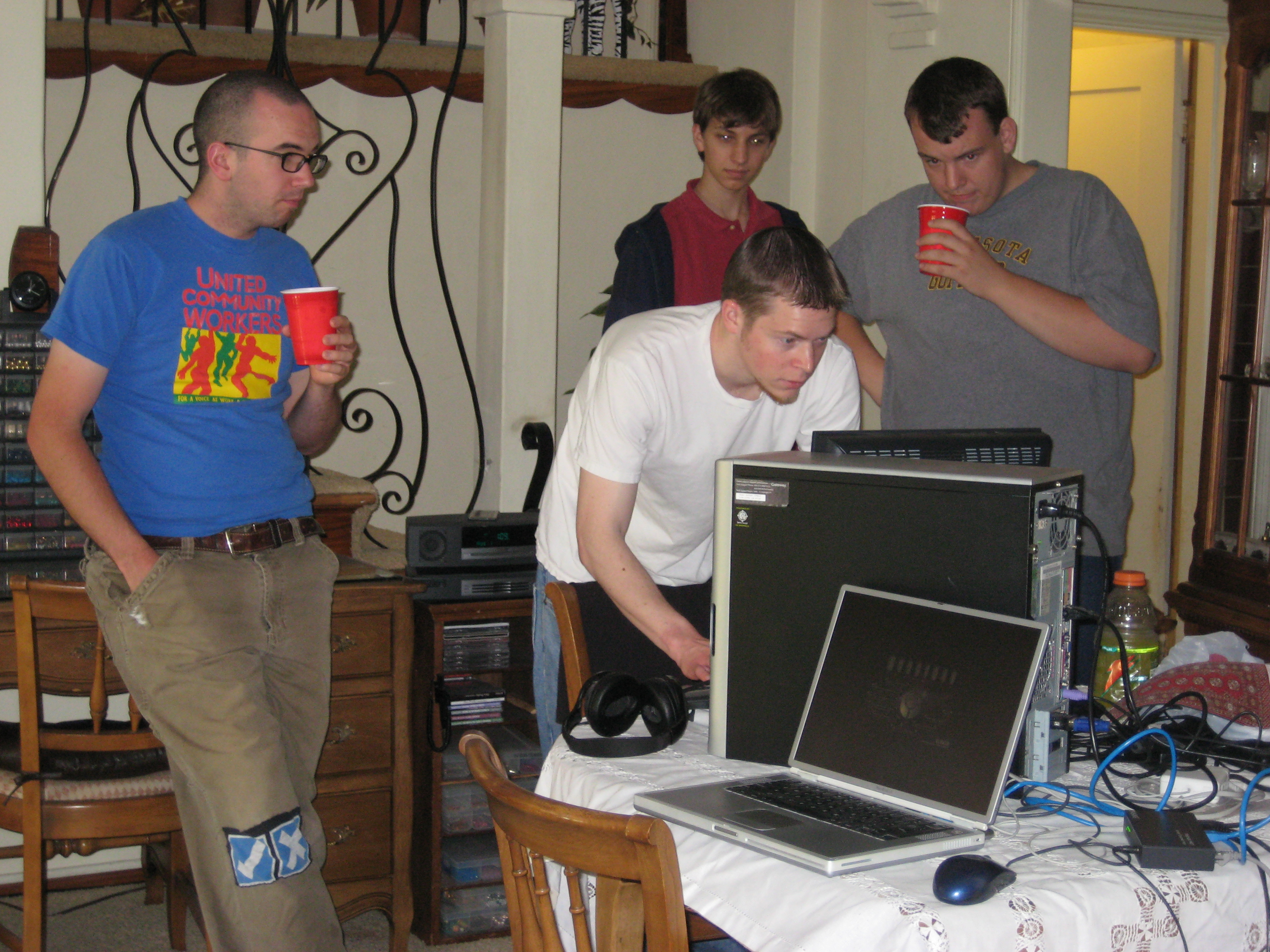
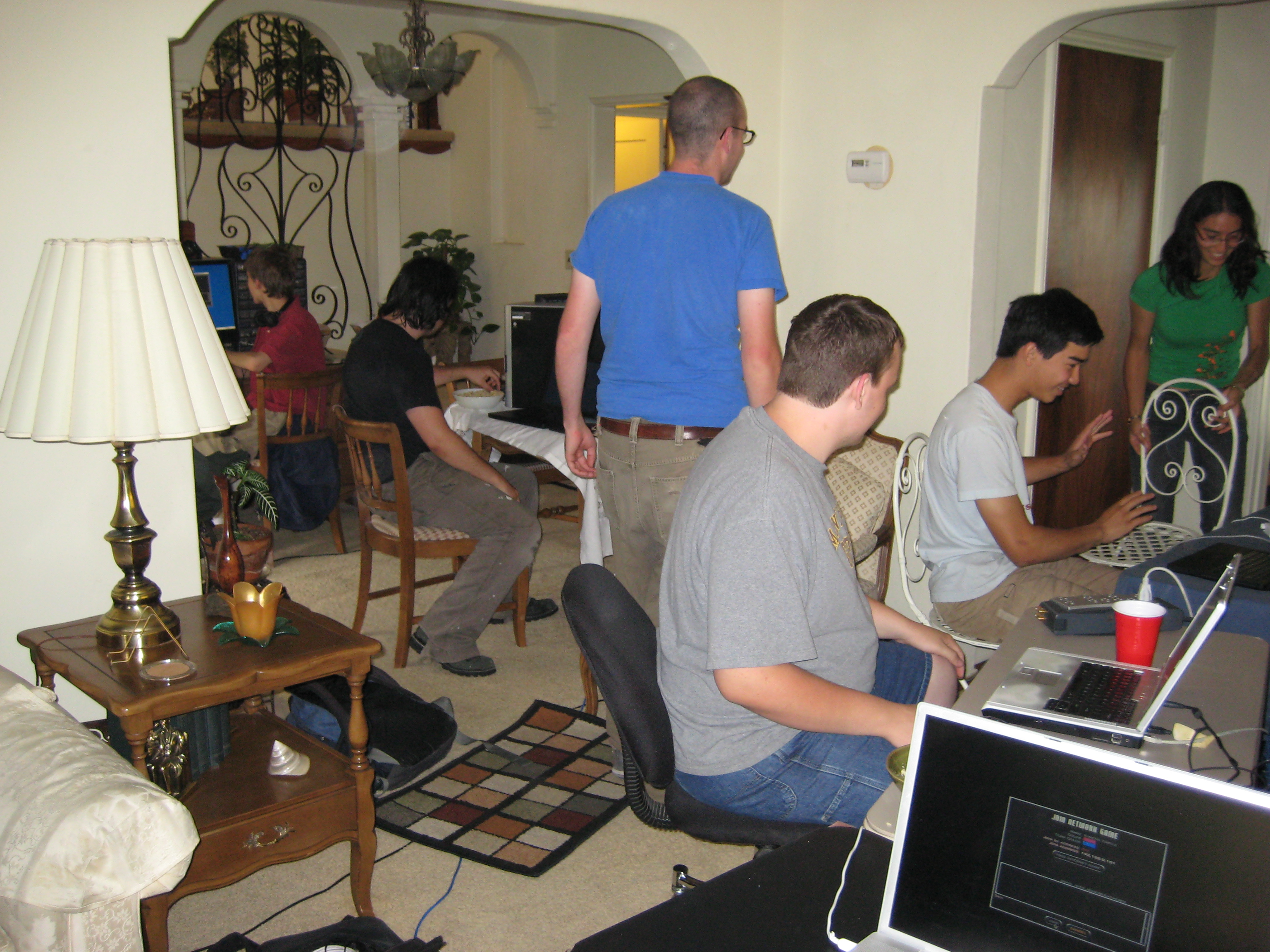
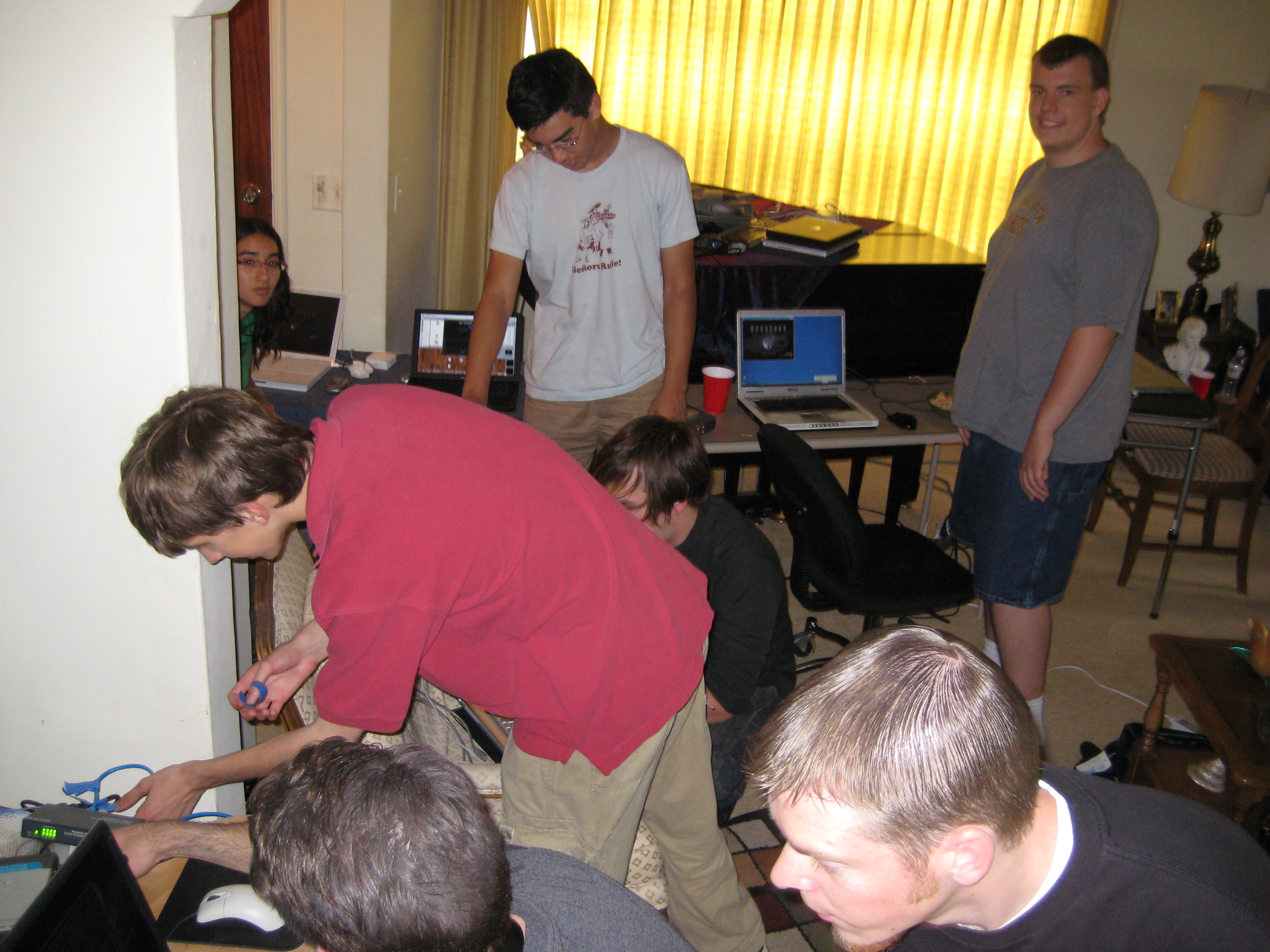
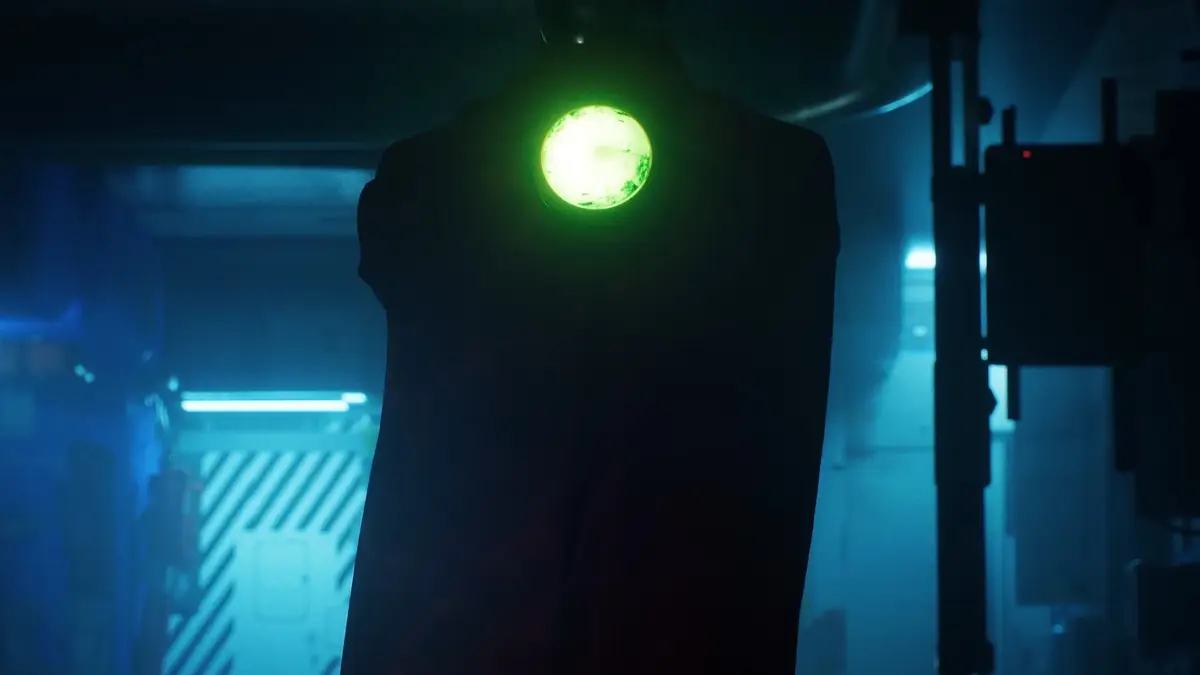
I’ll never forget that night I sat on the couch to watch the PlayStation State of Play. I put it on hoping Dani would get to see a trailer for the next God of War. I hadn’t heard the rumors, or if I had, I had ignored them. The Bungie Studios logo flashed on the screen and I saw something that could be Destiny but also felt… familiar.
Suddenly the bright glowing green orb and familiar flowing red cloak of the Compiler flashed briefly on the screen and I SCREAMED. Poor Dani continued to interact with me like normal for the next few days but the outside world would go in one ear and out the other as that trailer played over and over in my head with a big smile on my face. That night I texted a dozen old friends for the first time in a decade and began re-writing Simplici7y from scratch for probably the fifth time.
While the community has moved on from the Pfhorums and into Discord, Simplici7y has stood strong for 17 years.
I have no idea where I would be in life without finding a community that encouraged me to keep building, and most importantly, gave me people I cared about to build for.